DEVELOPING THERAPEUTICS TO TREAT DEVASTATING GENETIC DISEASES.
We are advancing a variant-agnostic, in vivo targeted gene insertion approach designed to address the underlying genetic cause of disease.

Many inherited metabolic disorders are caused by changes, or variants, in a single gene that disrupt normal metabolic function, often in the liver.
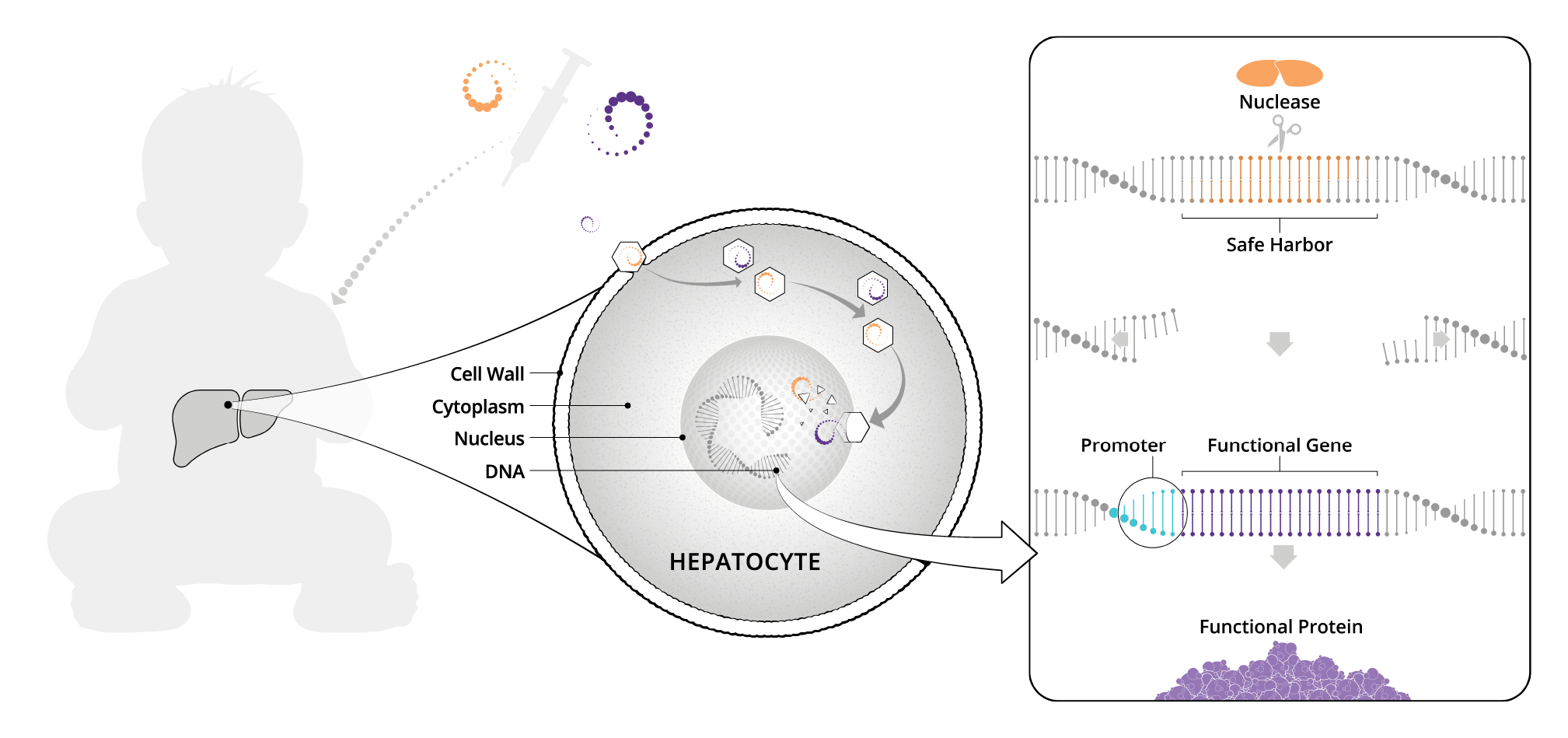
Our genome editing approach is designed to restore the function of a missing or dysfunctional gene, regardless of variant. We do this by inserting a functional copy within a patient’s genome, enabling lasting gene expression and the potential for sustained therapeutic benefit as liver cells grow and divide.
We use an ARCUS® nuclease developed by Precision BioSciences to make a targeted cut in the genome at the well-characterized PCSK9 locus, which serves as the insertion site for the functional gene copy.
For our current programs, we use adeno-associated virus (AAV)–based delivery, with one vector carrying the nuclease and a second vector carrying the functional gene copy.
As part of ongoing platform development, we continue to evaluate additional delivery methods and genome editing technologies.
The Need is Significant
Focusing on Rare Genetic Diseases
More than 400 rare, inherited liver diseases have been identified, affecting thousands of children each year across the United States and Europe. Many present early in life and can be severe, often driven by the buildup of toxic substances that can damage the brain. Despite this significant burden, few available therapies address the underlying genetic cause.
Our research focuses on inherited metabolic disorders, including urea cycle disorders (UCDs), a group of genetic conditions that impair the body’s ability to remove ammonia from the bloodstream. When ammonia accumulates, it can lead to life-threatening complications, particularly in infants and young children.
Gene therapy refers to a variety of techniques designed to modify genes to treat or prevent disease. Our in vivo targeted gene insertion approach is one type of investigational gene therapy being studied to address the underlying genetic cause of disease.
Learn more about how gene therapy works.